

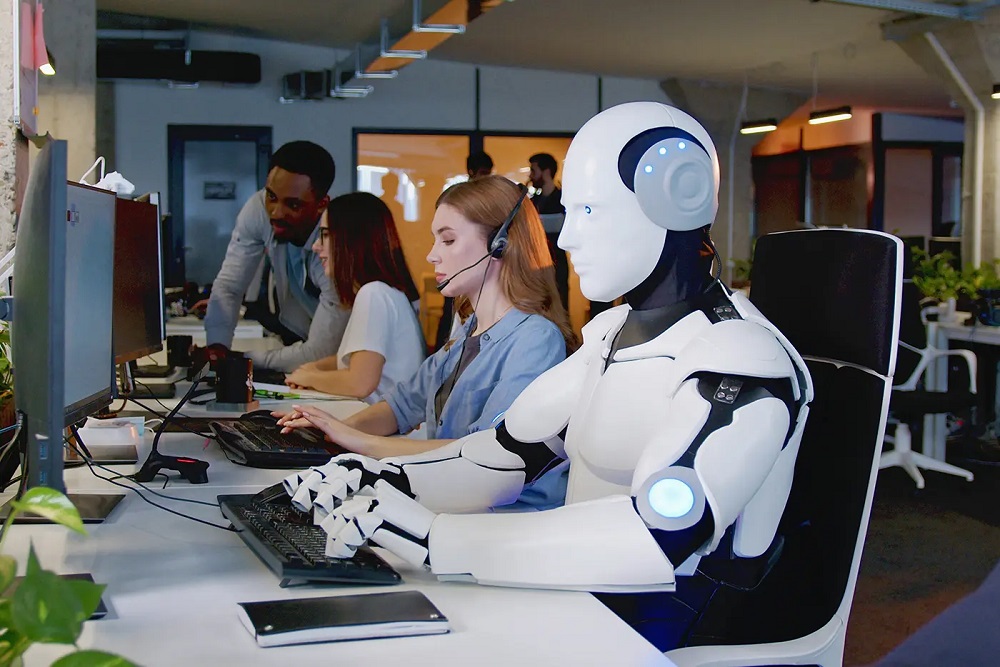
The global workplace is undergoing a structural transformation. For generations, technological advancements served primarily to speed up manual processes, moving office work from paper files to digital spreadsheets and from physical mail to instant messaging. Today, we are stepping into an era where digital systems do not just support human effort—they actively collaborate, analyze, and make autonomous operational decisions alongside us.
Driven by the convergence of artificial intelligence, spatial computing, hyper-automation, and modern cloud architectures, the boundary between physical offices and digital environments is dissolving. Organizations that adapt to these technological shifts are building more resilient, flexible, and efficient operational models. Exploring the specific technology trends redefining work reveals how businesses and professionals must prepare for the years ahead.
The Rise of Agentic AI and Autonomous Co-Workers
Artificial intelligence has evolved past basic generative outputs like text drafts and simple chatbots. The modern workplace is embracing agentic AI—autonomous systems designed to plan multi-step workflows, execute complex tasks, and adapt to changing data inputs without requiring continuous human prompt engineering.
Unlike passive software tools, AI agents act as true digital co-workers. They monitor supply chain disruptions in real time, analyze market trends to reallocate ad budgets, draft software updates, and handle initial customer escalation inquiries end-to-end.
-
Intelligent Workflow Execution: AI agents complete complex business operations by coordinating across multiple software applications simultaneously.
-
Shift to Intent-Driven Work: Employees are transitioning from executing repetitive technical tasks to articulating strategic intent, leaving the implementation details to automated software networks.
-
Continuous Adaptive Learning: Enterprise systems learn from past business outcomes, constantly refining internal processes to reduce operational drag.
This shift elevates human employees into supervisory and strategic roles, focusing their creative efforts on innovation, high-level negotiation, and nuanced problem-solving while automated systems handle administrative execution.
Spatial Computing and the Next Era of Virtual Collaboration
The traditional two-dimensional video conference call is reaching its limits as distributed workforces seek richer, more interactive ways to connect. Spatial computing—which blends physical and digital environments through mixed reality headsets, augmented reality displays, and spatial audio—is redefining workplace collaboration.
Instead of staring at grid layouts on flat monitors, remote and hybrid teams can interact inside shared 3D workspaces. Engineers across different continents can walk around a life-sized digital twin of a prototype engine, adjusting components collaboratively in real time.
-
Immersive Training and Onboarding: Field service technicians, surgeons, and industrial operators train in risk-free, photorealistic virtual simulations before applying skills in physical environments.
-
Spatial Data Visualization: Complex datasets, supply chain maps, and architectural blueprints transform into interactive 3D structures, making subtle patterns instantly visible.
-
Reduced Distance Bias: Virtual presence technology levels the playing field for remote workers, giving them an equal visual and spatial footing with team members physically present in an office.
By bridging physical distance with spatial presence, organizations can source talent globally without compromising complex, hands-on teamwork.
Hyper-Intelligent Smart Offices and Digital Twins
As organizations settle into permanent hybrid work arrangements, physical office buildings are transforming into data-driven smart environments. Powered by Internet of Things sensor networks and real-time spatial analytics, modern office spaces adapt dynamically to daily human occupancy.
Central to this trend is the concept of workplace digital twins—virtual models that map physical buildings down to room utilization, desk availability, energy consumption, and indoor air quality metrics in real time.
-
Dynamic Space Allocation: Smart booking systems use historical attendance patterns and real-time team schedules to reconfigure room layouts and optimize space usage.
-
Environmental Comfort Optimization: Environmental sensors automatically adjust lighting, HVAC airflow, and room temperature based on real-time room density, boosting employee focus while slashing energy consumption.
-
Predictive Facilities Maintenance: Embedded equipment sensors predict mechanical failures before they interrupt daily operations, scheduling maintenance automatically during off-peak hours.
These intelligent workplace features convert commercial buildings from fixed real estate overhead into responsive assets that prioritize both environmental sustainability and employee well-being.
Cybersecurity Beyond the Traditional Network Perimeter
The decentralized, cloud-reliant nature of modern work has permanently dissolved the traditional corporate network security perimeter. With employees connecting from home networks, shared co-working spaces, and personal devices, organizations must adopt robust Zero Trust Security architectures.
Zero Trust operates under a simple premise: never trust, always verify. Every access request—regardless of whether it originates inside or outside the physical corporate office—must be continuously authenticated, authorized, and encrypted before access is granted.
-
Continuous Identity Verification: Adaptive authentication systems evaluate user behavior, location context, and device health in real time before approving network access.
-
AI-Driven Threat Detection: Security software uses machine learning to monitor enterprise network traffic for subtle anomalies, isolating compromised accounts or devices within seconds.
-
Data Loss Prevention: Advanced governance frameworks protect sensitive IP across cloud platforms, ensuring data cannot be accessed, shared, or leaked through unauthorized consumer AI applications.
Building robust cybersecurity frameworks directly into daily workflows allows companies to give workers global mobility without exposing enterprise assets to malicious cyber threats.
The Pivot Toward Skills-Based Talent and Continuous Upskilling
The rapid speed of technological change is shortening the shelf life of technical skills. As artificial intelligence and automation absorb routine coding, basic data entry, and standardized reporting, the traditional reliance on rigid four-year degree requirements is fading. Organizations are shifting toward skills-based talent management models.
Instead of hiring strictly based on past job titles or educational credentials, leading enterprises assess candidates based on demonstrated competencies, cognitive flexibility, and practical technological adaptability.
-
AI-Assisted Upskilling Platforms: Personalized learning portals analyze an employee’s current skill set, match it against emerging company needs, and recommend targeted training modules.
-
Focus on Human-Centric Capabilities: As automated tools handle routine logic, high-value human traits—such as emotional intelligence, ethical reasoning, strategic negotiation, and creative critical thinking—become primary hiring criteria.
-
Internal Talent Marketplaces: Cloud platforms match existing employees with short-term internal projects, cross-departmental initiatives, and mentorship opportunities, encouraging internal mobility and career retention.
Establishing a culture of continuous learning ensures that technological transformation elevates the human workforce rather than rendering it obsolete.
Navigating the Ethical and Human Factors of Work Tech
While digital tools offer unprecedented productivity gains, integrating technology into every facet of work introduces serious cultural and governance challenges. Business leaders must balance efficiency drives against the need to protect employee agency, privacy, and long-term mental well-being.
Algorithmic management—using software tools to monitor worker productivity, track keystrokes, or assign schedules automatically—can easily create oppressive workplace environments if implemented without empathy and transparency.
Furthermore, as generative tools become ubiquitous, organizations must address potential algorithmic bias, intellectual property risks, and clear guidelines regarding responsible AI usage. Technology should serve as a human multiplier that enhances job satisfaction, rather than an invasive surveillance mechanism.
Frequently Asked Questions
Will artificial intelligence replace the need for entry-level human workers?
While AI automates basic administrative tasks, basic research, and repetitive data entry, it alters entry-level roles rather than eliminating them entirely. Entry-level workers are increasingly expected to act as managers of AI tools, focusing on validating automated outputs, applying critical thinking, and coordinating cross-functional workflows.
What is agentic AI, and how does it differ from standard AI tools?
Standard AI tools respond to individual prompts by generating static text, code, or imagery. Agentic AI operates with a degree of autonomy; given a high-level goal, an agent can break the task into sequential steps, interface with external software tools, correct its own errors, and complete complex workflows without constant human direction.
How does spatial computing differ from traditional virtual reality?
Traditional virtual reality typically completely replaces the user’s view with an isolated digital world. Spatial computing overlays and anchors digital content directly into the user’s physical environment or seamlessly blends physical and digital realities, allowing workers to interact with 3D data while remaining aware of their actual surroundings.
What skills will be most valuable for employees in an automated workplace?
While technical literacy in data analysis, AI prompting, and cloud systems remains essential, human-centered soft skills are becoming the most critical differentiators. Abilities such as critical thinking, complex problem-solving, adaptability, emotional intelligence, and strategic communication complement automated systems.
How do smart office sensor networks impact employee privacy?
Reputable smart office systems collect aggregated, anonymized environmental and spatial usage data—such as room occupancy counts, temperature, and motion patterns—rather than tracking individual employees. Organizations must maintain strict governance frameworks to ensure sensor data is used exclusively to optimize building efficiency and comfort.
Why is Zero Trust security becoming mandatory for modern workplaces?
With employees working across distributed cloud platforms, home networks, and mobile devices, traditional security perimeters that only guard physical office networks are no longer sufficient. Zero Trust assumes every connection request could be compromised, continuously verifying identity and context to prevent unauthorized data access.
How can small businesses implement these advanced technology trends on smaller budgets?
Small businesses do not need to build custom infrastructure; most modern software-as-a-service platforms integrate enterprise-grade AI agents, automated workflow tools, and security protocols directly into their standard subscription tiers. Focusing on automating high-friction, repetitive processes provides immediate return on investment without massive upfront capital.

Comments are closed.